A Non-Custodial Safe Harbour Only Your Team Can Open
A recovery destination for digital assets controlled by your team. Circuit issues the vault but holds no key to it and can never move your funds.
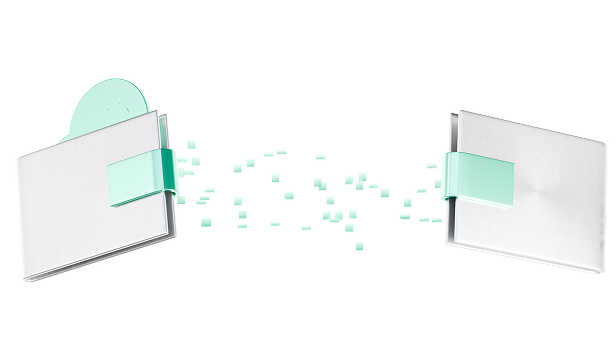
Whilst the “gold standard” is redundancy built into your tech stack, this is expensive in cost, time to deploy and maintenance.
As a backup wallet is necessary for Circuit’s tooling to be most effective, we designed backup Vaults to be an accessible solution for companies who care about their failover but haven’t yet invested the resources to have redundant wallet set-ups.
Vaults can operate as a long term redundancy solution or a temporary stop gap whilst your stack matures.
Most "secure storage" still leaves someone else able to move your assets: the custodian, the platform, or whoever holds the API key. That is a counterparty to trust and a single point to compromise. And when a recovery fires, the assets have to land somewhere. If that destination is custodial, you have not removed the risk, you have relocated it.

Control Your Destination with
Circuit: Backup Vault
A Backup Vault is a non-custodial vault Circuit provisions and hands entirely to your control. Authority lives with a quorum of your team, each holding a hardware security key. Circuit is only the issuer: no key escrow, no API key, and no way to move your funds.

How It Works
01
Propose
An admin names the vault, selects quorum members from your organization's Admins, and sets a threshold.
02
Enroll
Each member registers a hardware security key, a YubiKey or similar, through a WebAuthn ceremony. That credential becomes part of the vault's cryptographic root.
03
Provision
Once members are enrolled, the vault goes active and a stable address is derived for each supported chain.

04
Move on your quorum
Any movement of funds requires your threshold of hardware-key holders. Circuit cannot move funds alone, or in collusion with any single member.


Why Non-Custodial Matters
Control is enforced cryptographically by your quorum, not by Circuit's policies or good intentions. A Backup Vault cannot be drained by a compromise of Circuit, and it cannot be moved by any single insider on your side either. Circuit is not a custodian and cannot access, use, or reconstruct your keys. That is the difference between trusting a provider and not having to.

More Than a Recovery Endpoint
A Backup Vault is where Circuit Recovery sweeps assets during an incident. Because it is a stable, non-custodial, quorum-governed destination, it also works as ongoing storage you fully control: a standing safe harbour, not a one-time recovery target.
Who It’s For
Custodians
See Case Study
Exchanges
See Case Study
Trading Firms
See Case Study
Foundations & Treasuries
See Case Study
Liquidity Providers
See Case Study
Payment Providers
See Case Study
Why Circuit?
Non-Custodial by Design
Circuit issues the vault but holds no key and no API access. Only your quorum can move funds.

Quorum-Governed

Authority is split across your team's hardware keys, with a threshold no single person can meet alone.
A Standing Safe Harbour

A stable destination for recovery and for ongoing storage, entirely under your control.
Lloyd's of London Validated

Backed by the Lloyd's Central Fund. Circuit is SOC 2 attested.
Governance and Limits
Org-Owned Decryption
The backup is encrypted to a keypair your organization generates and owns. Circuit never sees the private key and cannot request it. The key is split M-of-N across your trusted team, so no single person is a point of failure.
Policy Control
Retrieval takes approval from your quorum. Circuit enforces the policy you set and logs every request, approval, and download.
Book a Demo
Set up your first vault.
Frequently Asked Questions

Not a custodian. A toolkit.
Book a demo to set up your first vault.
Thank you for your submission!


