Lloyd's of London started in a coffee house in 1688, insuring ships. Not because they cared about boats, but because ships were how value moved. Lloyd's made global commerce possible by underwriting it.
The form of value kept changing. Ships full of gold bars gave way to paper securities representing ownership, then electronic records in databases. Each evolution created new risks. Each time, the Lloyd's market figured out how to handle them.
Now value is moving between wallets on blockchains. And Lloyd's just made their first strategic investment in digital assets to ensure it moves safely.
What We Learned Inside the Market
Eight months ago, Circuit was invited to participate in the Lloyd's Lab. We embedded with underwriters, had many coffees and beers with brokers in Leadenhall Market, and asked one question over and over: what's stopping this market from developing?
The answer wasn't capital. Insurers have money. It wasn't demand. Institutions are desperate for coverage.
The problem was the tail risk.
Digital asset insurance is catastrophe-driven, like hurricane insurance. A single event can wipe out years of premiums. Bybit lost $1.5 billion in one attack. When losses cluster like that, the math breaks. One failure can become existential. Insurers look to protect themselves: Premiums become unaffordable. Coverage limits shrink. Exclusions are introduced. The market stops in its tracks.
To make digital assets insurable at scale, you have to mitigate the impact of a catastrophe. Better pricing cannot exist without reducing the frequency and size of losses.
Building for the Gap
We sat down with the best underwriters in the market to understand what was missing. Then we built products to plug those gaps.
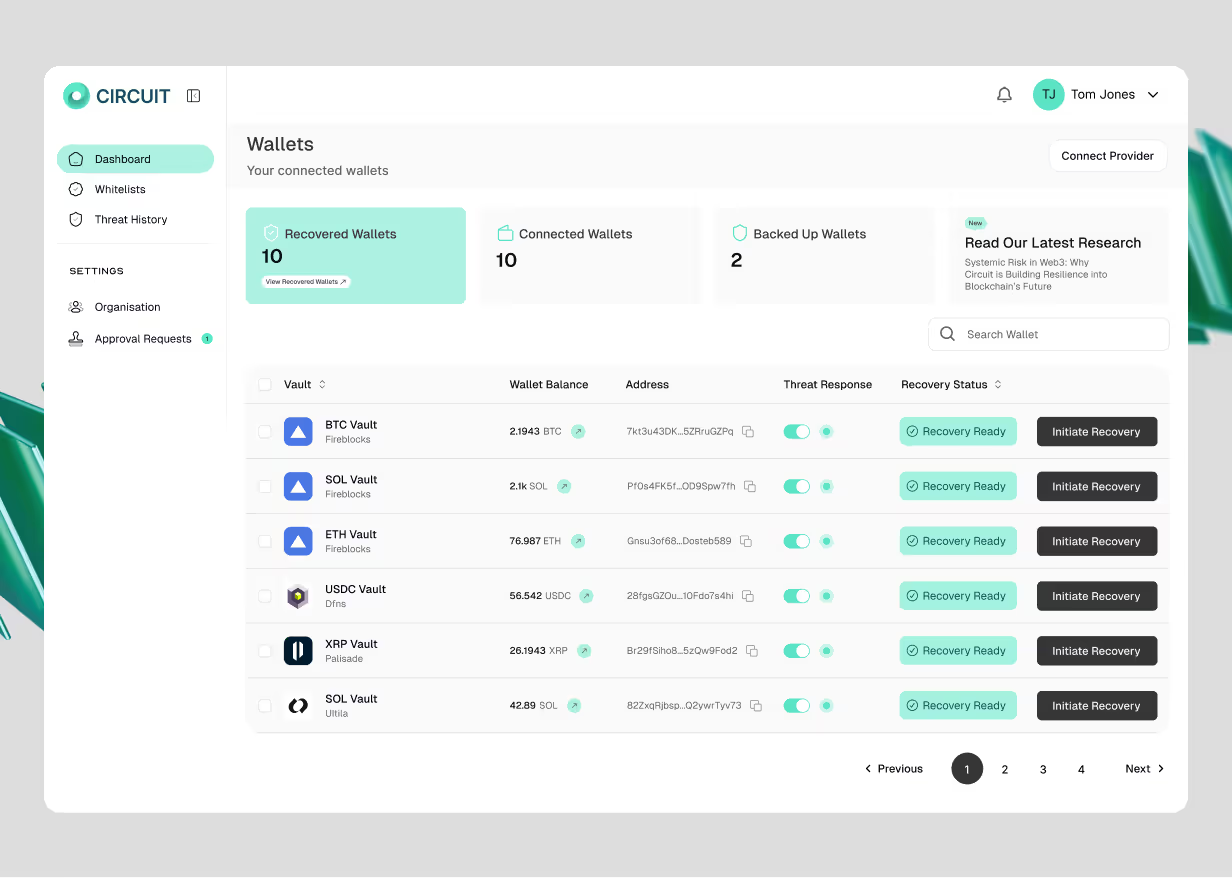
Circuit's technology stops losses that were previously unstoppable. When a system is breached and an attack begins, our systems move assets to safety in seconds, automatically. No waiting for humans to respond. Automated response at blockchain speed.
We worked with Lloyd's to validate this technology and embed it into underwriting processes. It's now materially changing how top insurers approach these risks.
But don't take our word for it. Look at the prices.
Circuit customers can now unlock premium discounts of up to 15% from some of the biggest insurers in the market. Insurance has skin in the game. Those discounts exist because Circuit's technology meaningfully reduces risk.
Why This Matters Beyond Crypto
My fundamental belief: In the next three years, every bank, every payments network, every financial institution will interact with blockchain rails. All assets will become tokenised and stablecoins will become the dominant medium of exchange. All of it will need protection that can keep pace.
Cyber insurance grew from a niche to a $16 billion market as every business moved online. Digital asset insurance will be even bigger, even quicker. Cyber protects data. This protects value itself.
Lloyd's has made their first investment in digital assets. They're not betting on crypto prices. They're betting that the infrastructure to unlock this market is finally being built.
We're building it. And now they're building it with us.
Want to keep up to date with Circuit? Sign up below
Related Posts
Discover more about Circuit’s latest News and Research
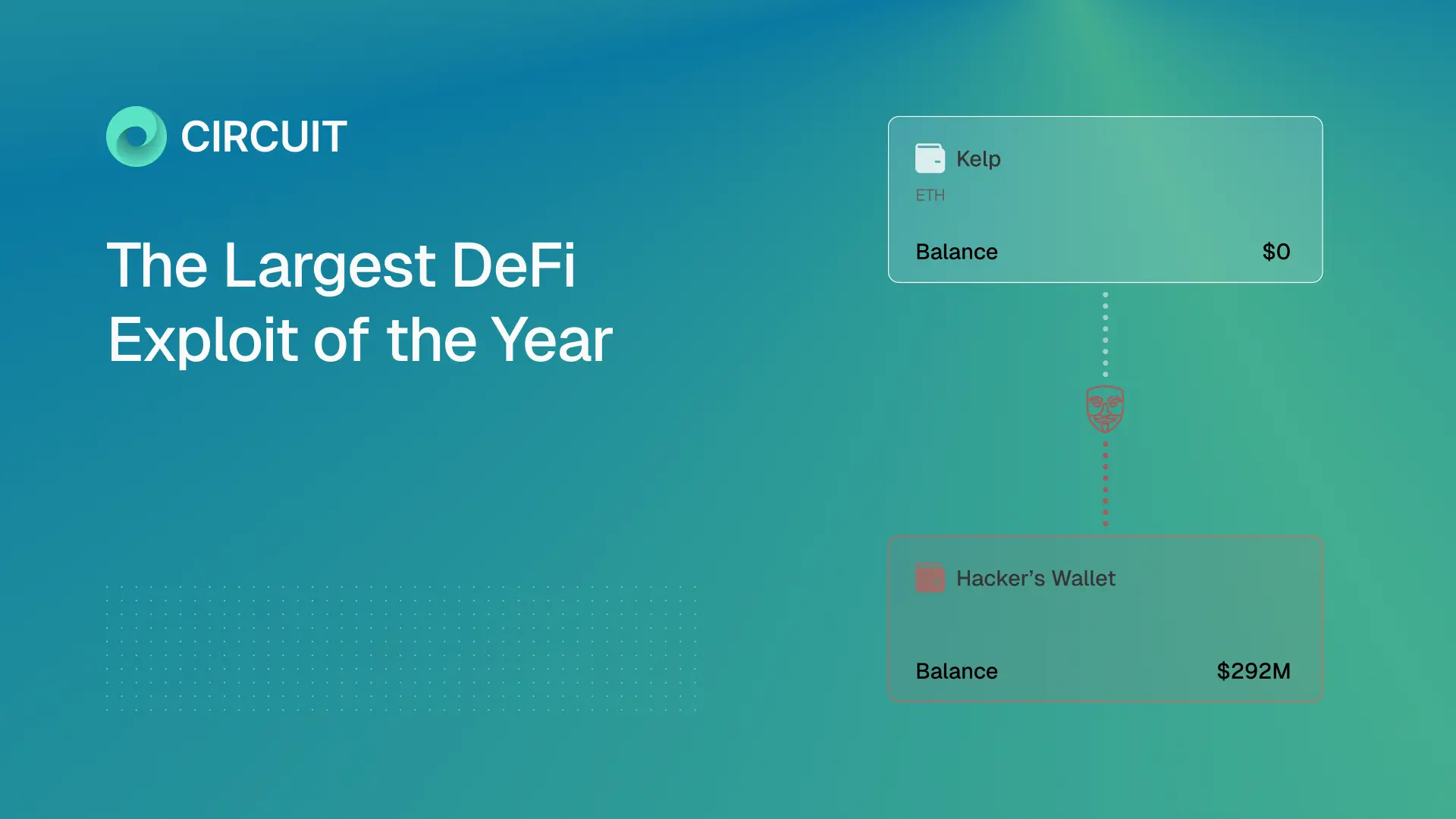


Inside the Kelp/LayerZero Hack: How Lazarus Forged $292M Into Existence
A single lie, six layers deep, and the cascade that pulled in every major lending protocol on Ethereum. A forged cross-chain message led to a $292M exploit draining Kelp and cascading into Aave and DeFi. This breakdown shows how one failure propagated across Ethereum.
$285M Drift Hack Breakdown
A single lie, six layers deep, and the cascade that pulled in every major lending protocol on Ethereum. A $285M DeFi hack executed in 12 minutes after 6 months of social engineering. This breakdown shows how Drift was compromised and what it means for crypto security.
What Google's Quantum Paper Actually Means for Crypto
The largest treasure hunt in human history is already underway. Google’s quantum paper cuts the timeline to break crypto security by ~20x. This guide explains the risks to Bitcoin, Ethereum, and $100B+ in digital assets.
Built by experts who’ve made digital assets safer, and now, recoverable
We believe asset recoverability is table stakes for the next era of digital assets.


